PRINCE2 Project Management Foundation: My path to certification

TLDR; in this post, I talk about PRINCE2 Project Management:
What it is about, why I decided to pursue the certification and how I prepared for the Foundation exam (which I passed).

I have been aware of PRINCE2 way before I joined the “agile tribe” by getting certified as a Scrum Master & Scrum Product Owner in 2020. Thinking it might be too “rigid” for the kinds of projects I work on, I did not see it as a priority. But a passionate PM and nerd like me loves learning new tricks, so I used some downtime in the fall of 2026 to challenge myself. 

Read on to find out what PRINCE2 is about, why I decided to pursue the certification and how that went.

Let’s first take a look at what PRINCE2 is and how it came about.

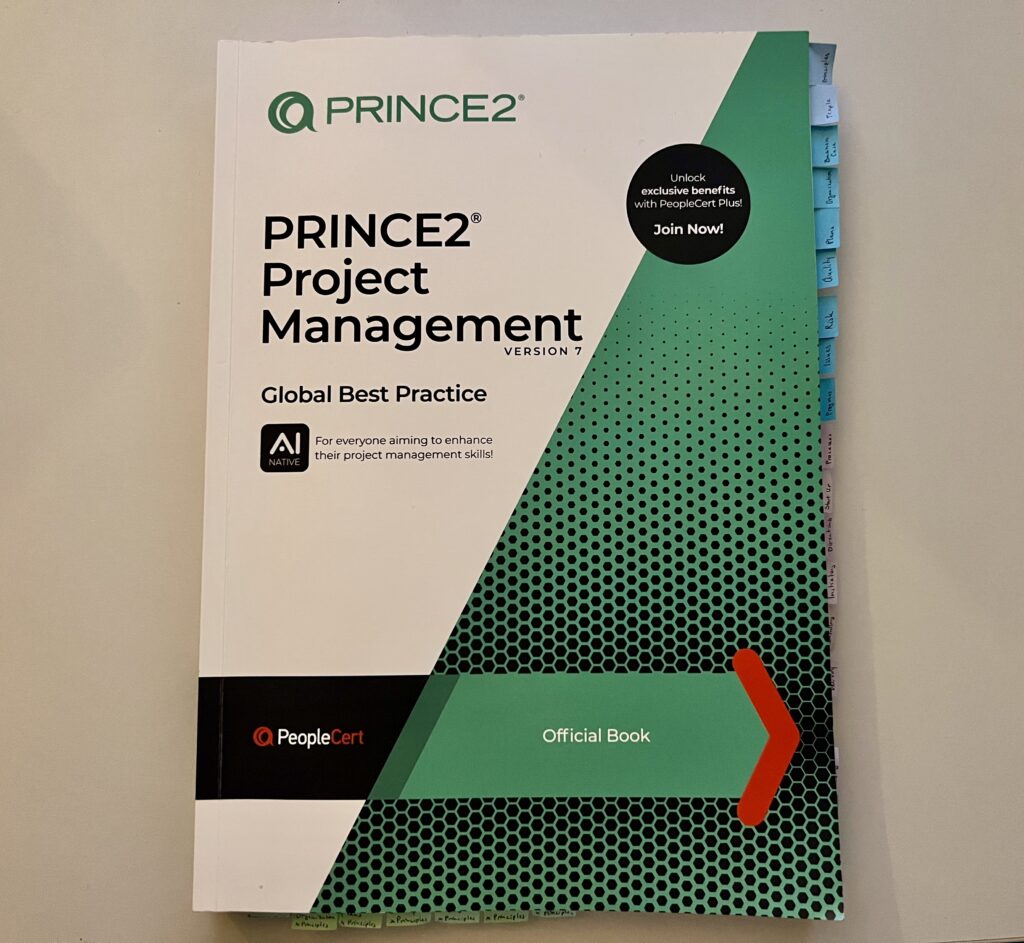
Photo of the PRINCE2 Project Management Version 7 Official Book
This is the current PRINCE2 Project Management book (7th edition). Even if the Foundation exam is a closed book exam, I recommend buying it for exam prep.

PRINCE2 Project Management: History and adoption

PRINCE (PRojects IN Controlled Environments) originated in the UK public sector and was originally developed in 1989 for government IT projects. In 1996, PRINCE2 was released as a generic project-management method applicable beyond IT. It was substantially revised in 2009, updated in 2017. In 2021, PeopleCert acquired it from AXELOS in 2013. The current PRINCE2 7th edition was launched in 2023.

Its strongest historical footprint is in the United Kingdom and Europe, particularly government and public-sector environments, but today it is internationally established. According to PeopleCert, it is used in more than 200 countries. You will hear that it is most significant in the Commonwealth countries (esp. UK, Australia) and the Netherlands, but increasingly also in Asia, Africa, and North America. There is no public ranking of adoption by industry, but PRINCE2 is especially visible in public services, IT and digital transformation, infrastructure, construction, healthcare, finance, and other regulated or complex change environments.


My thoughts on PRINCE2 and why I decided for it

PRINCE2 is a structured project management method built around 7 principles, 7 practices, and 7 processes. It defines responsibilities of the project management team, management products (which is basically the PRINCE2 term for documentation), stage controls (i.e. what to do to control a project phase), etc. Its strength is that it provides a common language and governance model: projects can be directed, managed, and delivered with clear accountability. But if you are new to PRINCE2, like I was just a few weeks ago, you will think: The jargon is off the charts! 😱

Sometimes PRINCE2 is described as rigid. However, there is a lot of emphasis on tailoring, so much so that it is one central principle. So while PRINCE2 itself is very detailed and has something to say about anything that could possibly happen during a project, it is meant to be adjusted to a project’s size, complexity, delivery method, risk, organizational context, and team capability. PRINCE2 (7th edition) also places great emphasis on people, sustainability, and integration with agile or hybrid delivery approaches.

For a project manager, I think the credential demonstrates structured knowledge of governance, planning, risk, progress and quality management, business justification, roles, and delivery. I believe the PRINCE2 method complements practical project experience, communication skills, and sound judgment. But a certification alone cannot replace those. And of course, the value of PRINCE2 knowledge and/or certification will be greatest where employers or clients recognize PRINCE2. 
 

How I prepared for the exam: Part 1 – Online Course

There are two levels to the PRINCE2 Project Management credential: Foundation and Practitioner.

PRINCE2 Foundation is the first and basic level of PRINCE2 certification that confirms the overall understanding, familiarity with the PRINCE2 vocabulary and capability to work as a member of a project management team.

Source: https://prince2.wiki/certification/prince2-foundation/ 

PRINCE2 Practitioner is the advanced level of certification that confirms a sufficient understanding of how to tailor and implement PRINCE2 in a project. In order to get this certification you have to prove that you have the competences needed for the Foundation certification and, moreover, that you are able to apply this knowledge and tailor PRINCE2 to address the issues and needs of a specific project scenario.

Source: https://prince2.wiki/certification/prince2-practitioner/ 

I took a 1 week online crash course with ILX Group, that combines contents of the Foundation level and the Practitioner level. In this course, we spent 3 days on the Foundation level knowledge and 2 days practicing scenario applications for the Practitioner level.

The tutor lives and breathes PRINCE2 – I am sure if you wake him up from deep REM sleep at 3am, he would still be able to quote the entirety of the official PRINCE2 workbook flawlessly. He was also really kind and sent a follow-up email after the course with some recommended reading ahead of the exam(s).


img 9774

I sat the course and exam in English because English is my main working language. I could have taken the course in my native language (German) as well, but figured that would likely mean I’d have to relearn the terminology in English at some point. 

The ILX course gives you access to the official PRINCE2 7th edition book in ebook format (only accessible online on the official PeopleCert learners’ platform or with their proprietary ebook reader, most likely to prevent illegal copying). Before the course, I assumed that the course itself would be enough to feel ready for the exam. After the course, I discarded that idea as foolish. 😅

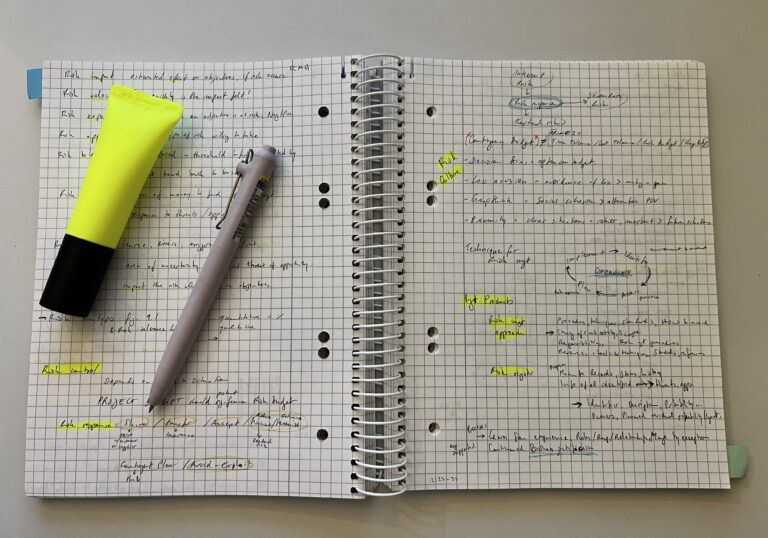
I knew I needed another recap and a thorough read through the physical book, which I only received on day 4 of the crash course, i.e. day 1 of the Practitioner portion of the course. Using the ebook worked fine for me during the course, since I found it convenient to have the zoom call and the book on my screen in front of me. But for self-paced review, I like to have a physical copy where I can fool around with annotations and sticky notes.


How I prepared for the exam: Part 2 – Self-study

After I finished the course, I whipped up a plan to prepare for the Foundation exam: Structured (of course!), ambitious but not overwhelming. I gave myself 8 days: My study plan was to review one of the 7 practices and one of the 7 process per day. That’s 7 days. On the 8th day I would review the appendices: Management products and role descriptions. The daily plan also included thoroughly working through 2-3 pages of the Sample Question papers provided by ILX as part of the course. 

I ran an AI-enhanced study log of each day’s progress, including the questions attempted, accuracy, confidence (e.g. when I was torn between two possible answers and why), and recurring errors. I analyzed incorrect answers to distinguish between:

  • incomplete topic coverage (i.e. is this a gap or have I just not reviewed this topic yet?),
  • misunderstanding a PRINCE2 distinction (e.g. a simple verb like “check” can be a normal English word, or a step in a PRINCE2 technique… I wish they would capitalize those),
  • misreading or inattentive reading of the question.

With this approach, I was able to identify specific topics to give a little extra love in the form of flash cards. For example the business case management technique and which role is responsible for which step in it (coming from the agency world, I am pretty used to doing everything myself, so the idea of different roles “officially” taking responsibility of different steps in the creation and maintenance of one document took a while to click for me).

After one week, I had worked through two Sample Papers, as well as all seven practices and processes, as well as the appendices. My practice log recorded 82.9% correct answers. On the last two days, I timed my practice and landed at 85%, with a pace of approximately one question per minute.


Sitting the PRINCE2 Project Management Foundation exam

I sat the exam on September 29th. 2026. Both levels of PRINCE2 exams are proctored exams, which means that you’ll need your camera and microphone switched on while someone will be “watching” you to make sure there’s no cheating going on. But that’s not all: The room you take the exam in can only have one door, which needs to remain closed and visible for the entirety of the exam. There are even more rules like “no glass doors or glass walls”, and specific rules as to where the source of light should or should not be. I was unaware of these strict exam rules before I signed on to the course, so I had to get creative to find a location where I could take the exam.

Despite my nerves flipping briefly due to an unexpected interruption during the exam, I managed to pass with 80%. The result matched my preparation profile, and while it isn’t perfect, it is still comfortably above the pass threshold.

After the exam, I gave myself a week of rest from studying, before jumping back into exam preparation for the Practitioner level. I will report back with another post, once that is done and I have sat the Practitioner exam.

Sources